
Applying for an Italy visa from Nigeria is entirely achievable in 2026 – Here is the honest, complete guide that skips the fluff.
How to Apply for an Italy Visa in Nigeria (Tourist, Visit & Business)
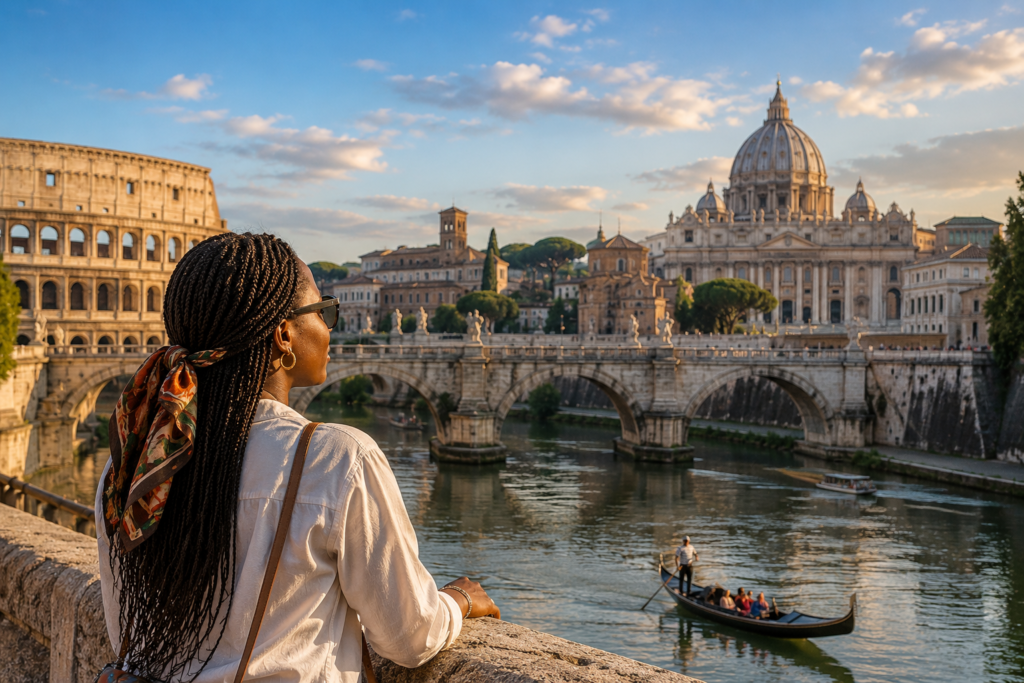
Few countries in the world carry the emotional weight of Italy. The Colosseum under a golden afternoon sun. A bowl of carbonara in a Roman trattoria. Venice’s canals at dawn. The Amalfi Coast winding dramatically above the sea. For Nigerian travellers, Italy represents something profound – a crossroads of ancient history, art, fashion, and food that has shaped Western civilization itself.
If you hold a Nigerian passport and Italy is your destination, you need an Italy visa before you board your flight. Italy is a full member of the Schengen Area, and a valid Italian Schengen visa allows you to travel freely across all 27 Schengen member countries. This guide gives you everything you need to apply successfully – from documents to fees to insider tips from the experts at Mr Schengen Visa.
There is no shortage of Italy content online, and almost all of it is correct. Yes, the food is as good as claimed. Yes, Rome is as overwhelming as advertised. Yes, the Amalfi Coast is as beautiful as the photographs suggest, possibly more so.
What the photographs consistently fail to capture is the texture of ordinary Italian life that exists alongside all of it.
The Roman Forum — where Julius Caesar was cremated, where Mark Antony gave the speech that turned public opinion against his assassins, where the Roman Senate met for centuries — is not a museum. It is an open-air archaeological site that you walk through at ground level, with no glass between you and the stones. The Colosseum, which held 50,000 to 80,000 spectators for events two thousand years ago, is still structurally significant enough that modern engineers study its construction methods. The Vatican Museums contain works that took Michelangelo four years to paint on his back on a scaffold, works that he reportedly hated the project and was grateful to finish.
Florence has more Renaissance art per square kilometre than any other city on earth. The Uffizi Gallery alone contains enough material for three separate visits, and most visitors come once and leave feeling they’ve only seen the surface.
Venice exists on 118 islands connected by 400 bridges, with no cars, no motorcycles, and no roads — just water and stone and a city that has been slowly sinking since the 13th century and shows no signs of abandoning the project. Milan is the fashion and finance capital of the country, uninterested in being charming in the way Rome is charming, and entirely itself for it. Sicily is what happens when Greek, Arab, Norman, Spanish, and Italian civilisations all occupy the same island over two thousand years and decide, eventually, to cook together.
Then there is the food. Italians do not merely eat well. They have codified eating well into a near-religious practice. A plate of cacio e pepe in Rome, properly made, contains three ingredients — pasta, cheese, black pepper — and will rearrange your understanding of what simple food can taste like. A Neapolitan pizza follows traditions registered as intangible cultural heritage by UNESCO. The gelato in Florence is nothing like the ice cream you’ve had anywhere else because the Florentines decided it shouldn’t be.
Nigeria and Italy share the conviction that food is not incidental to life. It is central. Going to Italy with that understanding makes the trip significantly better.
Ngozi had a list: the Colosseum, the Vatican, a gondola ride in Venice, and carbonara in Rome. She had been adding to it for years. When she finally sat down to apply for her Italy visa from Nigeria, she was organized, precise, and submitted her application 7 weeks early. She got her visa in 12 days. ‘Italy is worth every document they ask for,’ she told her travel group. ‘Just be thorough, be honest, and apply with time to spare.’
What Is the Italy Schengen Visa?
An Italy Schengen visa is a short-stay authorization that allows Nigerian passport holders to enter Italy and the wider Schengen Area for up to 90 days within any 180-day period. It covers tourism, family visits, and business travel. The standard visa fee is €80 for adults, and applications are processed through VFS Global in Lagos and Abuja.
Italy is one of the most visited countries on Earth, consistently welcoming over 50 million tourists annually. It is also one of the top Schengen visa issuers for Nigerian applicants which means consular officers are experienced with Nigerian applications and know exactly what a strong file looks like.
Why Italy Is a Dream Destination for Nigerians
Italy is one of the most visited countries in the world and it is not hard to see why. The Vatican, the Colosseum, the canals of Venice, the fashion of Milan, the beaches of Sicily, the cuisine that has conquered every continent. For business travellers, Italy is a major European economy with world-renowned fashion, automotive, food, and design industries.
As a Schengen member, an Italy visa provides access to all 29 Schengen countries.
The Visa Framework - What You're Actually Applying For
Italy is a founding member of the Schengen Area. A visa issued by the Italian consulate is a Schengen visa — valid across all 27 member states for the duration of its validity. The same approval that opens Rome opens Paris, Barcelona, Vienna, and Athens.
Schengen Type C — Short Stay
For visits of up to 90 days within any 180-day window. Covers tourism, family visits, business travel, conference attendance, medical appointments, and short academic programmes. Available as single-entry, double-entry, or multiple-entry depending on your travel history and circumstances. This is the visa category that applies to the large majority of Nigerian applicants.
Long-Stay National Visa (Type D)
For stays exceeding 90 days — students enrolled in Italian institutions, workers relocating for employment, or those beginning a formal residency process. Substantially more documentation required, and the process differs significantly. This guide covers Type C.
Where Nigerian Applications Are Submitted
Italy’s Schengen visa applications from Nigeria are processed through VFS Global, acting on behalf of the Italian Embassy. Submission centres operate in both Lagos and Abuja.
Appointments are mandatory. Walk-in submissions are not accepted under any circumstances. During the period between April and August — when European summer travel demand peaks — appointment availability tightens considerably. Book your slot six to twelve weeks before your intended travel date, and do not wait until your documents are complete before booking. The appointment date creates the deadline that disciplines the entire preparation process.
VFS Global Nigeria locations:
- Lagos — Victoria Island (primary centre for southern Nigeria)
- Abuja — Serves FCT and northern Nigerian applicants
You can book appointments and submit all documents through VFS Global. The Italian Embassy in Abuja handles select complex or sensitive cases directly.
Italy Schengen Visa Requirements for Nigerian Applicants
Core Documents (All Applicants)
- Valid Nigerian international passport — Minimum 3 months validity beyond your intended return date; at least 2 blank visa pages
- Completed Schengen visa application form — Signed and dated; download from VFS Global or the Italian Embassy website
- 2 recent passport photographs — 35×45mm, white background, taken within the last 6 months
- Travel health insurance — Minimum €30,000 coverage, valid throughout the Schengen zone for your entire trip duration; must be from an internationally recognised insurer
- Return flight reservation — A reservation is sufficient; you do not need a purchased ticket
- Proof of accommodation — Hotel bookings, confirmed Airbnb reservation, or a notarised invitation letter if staying with friends or family
- Bank statements — Last 3–6 months, all pages, certified or stamped by your bank; showing regular income and sufficient funds
- Cover letter — Explaining your purpose of travel, planned itinerary, dates, cities you’ll visit, and why you will return to Nigeria after the trip
- Proof of employment or business — Employment letter on company letterhead (with position, salary, and approved annual leave), plus 3 recent payslips; or for business owners: CAC registration, tax clearance certificate, and evidence of active business
For Tourist Applicants — Also Include
- Day-by-day travel itinerary (which cities, which attractions, what dates)
- Evidence of Nigerian ties: property ownership, dependent family, ongoing business contracts
For Visit Applicants (Visiting Family/Friends) — Also Include
- Notarised invitation letter from your host in Italy
- Your host’s proof of Italian residency or citizenship (Permesso di Soggiorno, or Italian ID)
- If your host is sponsoring your trip: their bank statements and an affidavit of sponsorship
For Business Applicants — Also Include
- Official invitation letter from the Italian company (on company letterhead, signed by a director, with company stamp)
- Italian company’s Chamber of Commerce registration extract (Visura Camerale)
- Your Nigerian company’s registration documents
- Evidence of prior business relationship if applicable (contracts, correspondence)
How to Apply for Your Italy Schengen Visa: Step by Step
Step 1 — Book your appointment: Visit the VFS Global Italy Nigeria website and schedule your biometric appointment. Italy is a high-demand destination, particularly from April to August. Book at least 6–8 weeks before your travel date.
Step 2 — Prepare your document pack: Gather originals and one photocopy of every required document. Arrange them in the order listed in VFS Global’s document checklist. Disorganised submissions send the wrong signal.
Step 3 — Attend and submit: Arrive at your scheduled appointment on time. VFS staff will review your pack, collect your biometric data (fingerprints and digital photograph), and issue a tracking reference. Biometrics are valid for 5 years, if you’ve been enrolled recently for another Schengen visa, you may not need re-enrolment.
Step 4 — Pay the fees
- Adult visa fee: €80 (paid in Naira at the prevailing rate)
- Children 6–12 years: €40
- Children under 6: Free
- VFS Global service charge: applied separately (check the VFS Nigeria website for the current Naira amount)
Step 5 — Track your application and collect: Use the VFS Global online tracking portal with your reference number. Standard processing takes 10–15 working days. During peak summer months, allow additional time.
Italy Schengen Visa Financial Requirements
Italy’s official guidelines specify a minimum of €269.60 for stays up to 5 days, with additional amounts per day thereafter. In practical terms, showing a consistent available balance of €100–€150 per day of your intended stay is the benchmark used by experienced applicants.
For a 10-day trip, your bank statements should comfortably reflect at least €1,000–€1,500 in accessible funds, not locked in fixed deposits or pension accounts.
What matters equally to the amount:
- Consistency — Regular monthly income credited to the account
- Clean history — No large, unexplained cash deposits in the weeks before application
- Stability — An account that has been active for at least 6–12 months
Why Italy Visa Applications Get Rejected And How to Avoid It
Understanding refusal reasons is as important as knowing the document list. The most common causes of Italy Schengen visa refusals for Nigerian applicants are:
- Insufficient financial proof — Low or irregular balances, or sudden cash injections just before applying
- No convincing ties to Nigeria — If the consular officer cannot see a clear reason for you to return home, that’s a major red flag
- Vague or missing cover letter — A generic letter adds nothing; a specific, personal one significantly strengthens your file
- Invalid travel insurance — Coverage that doesn’t meet the €30,000 threshold, has exclusions, or expires before your return date
- Incomplete documentation — Even one missing document can stall or reject an otherwise strong application
- Inconsistencies across documents — Dates, names, or travel details that don’t align between your letter, form, and supporting documents
Italy Travel Tips for Nigerian Visitors
Language: Italian is the sole official language and English proficiency varies significantly outside major tourist centres. Learning ten to fifteen essential phrases — greetings, menu vocabulary, direction-asking — makes a material difference to the quality of your interactions. Italians respond warmly to visitors who make the effort.
Restaurant culture: In Italy, a meal is not a transaction. Sitting down for lunch or dinner at a proper restaurant expects a minimum of an hour, often two. Asking for the bill before you’re ready to leave is considered strange. Eating pasta with a spoon is considered criminal in some regions. These are not arbitrary rules — they are expressions of how seriously Italy takes the act of eating.
Train travel: Italy’s train network connects its major cities efficiently and is generally the best way to move between destinations. High-speed trains between Rome and Florence take approximately 90 minutes. Rome to Milan takes under three hours. Book in advance for better prices.
Tipping: Service charges are often included in restaurant bills. Where they’re not, leaving small change or rounding up is appreciated but not obligatory in the way it might be elsewhere.
The queue at major sites: The Colosseum, the Vatican, the Uffizi — all have notoriously long queues for visitors without advance bookings. Book all major attractions online before leaving Nigeria. This is not optional advice for a comfortable Italian itinerary. It is essential planning.
The Correct Sequence of Preparation
- Confirm your passport validity and available blank pages. Renew before anything else if needed.
- Book your VFS appointment to establish a concrete deadline for your preparation.
- Gather financial documents first — bank statements, employer letters, and business records require the most lead time.
- Purchase Schengen-compliant travel insurance.
- Request a provisional flight itinerary from your travel agent. Do not pay for non-refundable tickets yet.
- Arrange refundable accommodation or obtain an invitation letter from your Italian contact.
- Write your cover letter last, when all other documents are assembled and you can describe your complete package accurately and specifically.
- Submit your full, organised package. Track it. Wait for a decision before committing to non-refundable travel expenses.
Your Italy Experience Starts with the Right Application
Italy delivers on every promise it makes and then some. The art, the history, the coastlines, the food. There is genuinely no substitute for standing in front of the Sistine Chapel ceiling, or watching the sun set over the Cinque Terre from a hillside terrace.
Your Italy visa is the key to all of it. And getting it right – the documents, the financial proof, the cover letter, the timing is what separates approvals from rejections.
At Mr Schengen Visa, we help Nigerian applicants build visa files that work. From document review to cover letter writing to expert consultations, we have the experience to maximize your chances of approval.
Frequently Asked Questions: Italy Schengen Visa from Nigeria
How long does it take to get an Italy Schengen visa from Nigeria?
Can I visit France and Germany on my Italy Schengen visa?
What bank balance do I need for an Italy visa from Nigeria?
Do I need a confirmed flight ticket to apply for an Italy Schengen visa?
Can I extend my Italy Schengen visa if I want to stay longer?
What happens if my Italy visa is refused?
Ready to Apply for Your Italy Schengen Visa?
Navigating the Schengen visa process can feel overwhelming but it doesn’t have to be. At Mr Schengen Visa, our expert consultants help Nigerian applicants put together airtight visa files that maximize approval chances.
Let us take the stress out of your visa application. Book a Free Consultation |
  Download Your Slovenia Visa Checklist
Address: KM 4 Gbongan – Ibadan Rd, opposite Sterling Bank, Osogbo 230284, Osun, Nigeria.
Phone: +234 816 237 7613 | Email: mrschengenvisa@gmail.com